Tuesday, March 14, 2017

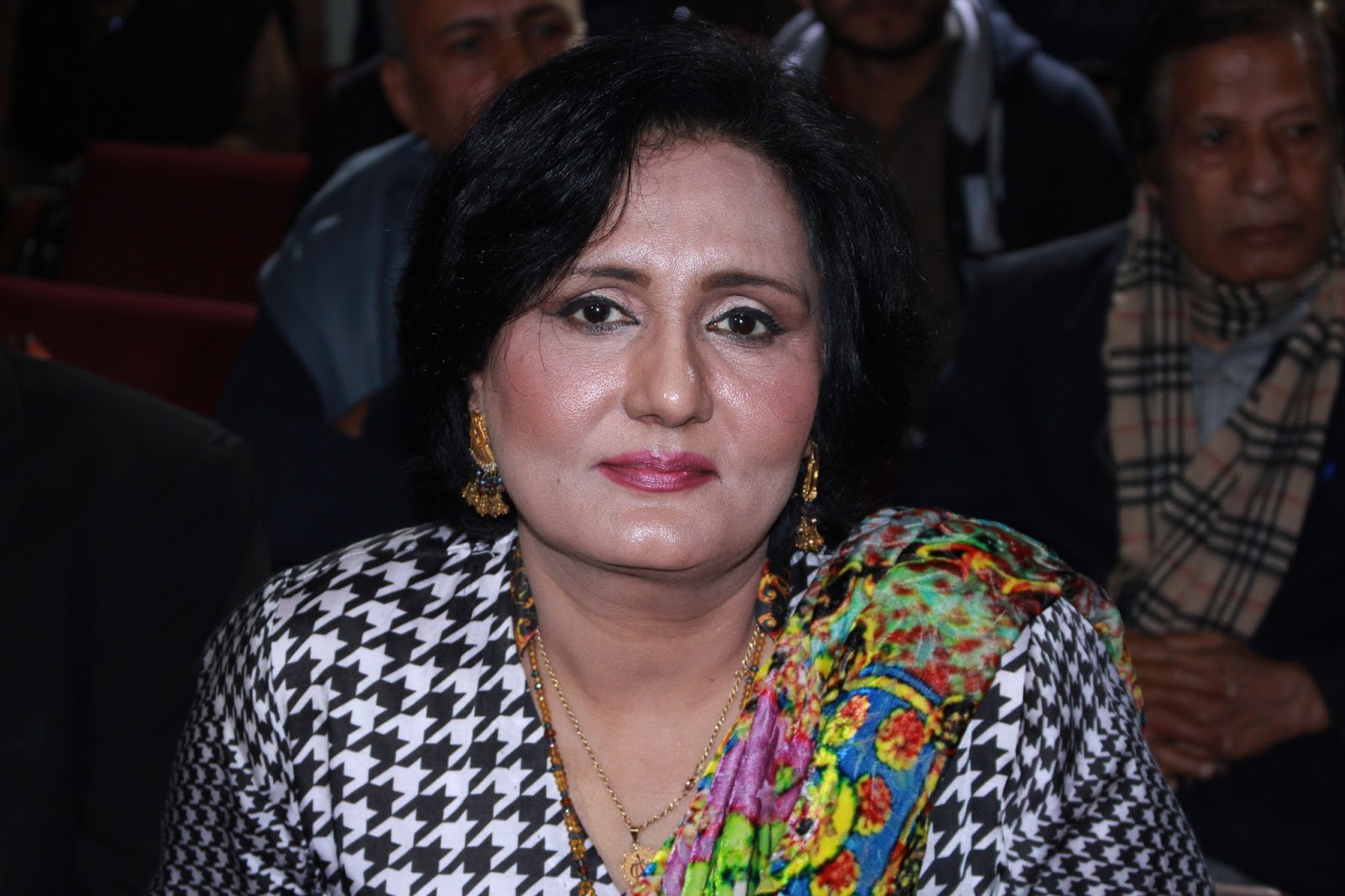
A Radio Show For Parveen Rahman..A social activist who was killed by Mafia in Karachi


A Radio Show For Parveen Rahman
A social activist who was killed
by Mafia in Karachi


A radio program Lok Lhar recorded 13th March at Mast FM103 ''Parveen di veel'' by Aamir Riaz along with Guests Hafiz Rashid Director Katchi Abadis Authority, Country head Fresh Water Network South Asia (FENSA), Dr Imdad Hussain Director Punjab Urban Resource Center, Lhore and Assistent Professor School of Public Policy FCC University and Atif Hassan Consultant and Advisor Mauwan, Lhore

Who killed Parveen? Either in FATA or in Karachi,Mafia & Taliban are not two separate entities yet they smartly pass on blames on each other time and again.

Listen the program by clicking below link
https://clyp.it/hbqokgvj

سال دی اخیری رات اوہ بھٹ شاہ جاندی سی اتے شاہ عبدالطیف دے مرزا تے سندھو دی’’ ست ملکاواں‘‘ دا گیت سن دی سی۔ اے ست ملکاواں مومل، سسی، ہیر، لیلیٰ، ساروتھ، مار وی تے سوہنی نیں۔(ذرا غور کرو، سند پنجاب کنج رلیا ملیا ہے پر انہاں قومیتی تے لسانی ٹھیکے داراں انگریز وانگ ایس وچ ونڈیاں پائیاں نیں) ایہہ کلام اوس نوں تازگی بخشدا سی۔ انور راشد مذاق وچ آکھدا سی، جے پروین بھٹ شاہ ویلے جمی ہوندی تاں ایس دے ناں نوں وی ملکاواں وچ لطیف رلتی کرلینا 
سی۔


Wednesday, March 8, 2017

Gender Biases in Textbooks is a Mirror to Understand preferences of the State


Gender Biases in Textbooks is a Mirror to Understand Preferences of the State

I reviewed textbooks but not in official capacity but as private researcher yet in news item it is reported otherwise. I did research regarding content analysis and review of pictures two times in last 6 years yet i also check old textbooks too. Although there is a visible change in PCTB books yet a lot more work is still pending partly due to bureaucratic mechanism and partly due to capacity. Anyway, here I am sharing two news items especially with reference of only Gender biases.
Complete story of Tribune Published at March 7, 2017
Extracts
Double Play by the Mushraff
During Pervez Musharraf’s era, the country decided to reform textbooks to ensure gender parity with the help of United Nations Educational, Scientific and Cultural Organization (Unesco) but a 2015 study reveals the books remain as biased as they were in 2004. Masculinity and ‘male knowledge’ prevails while female representation is limited to roughly 20% in characters and pictures. Fewer women are shown in nondomestic pursuits.

Another study, conducted by former book reviewer at Punjab Textbook Board Aamir Riaz, corroborates these findings. His research, which looked at content for grade one till 10 for year 2014-15, confirmed that textbooks had minimal women representation, urban biases, men-dominated occupations and specified roles for women, such as cooking and cleaning

Through such representation in textbooks, Riaz says gender biases are ingrained in children’s minds from a very young age. “This is image making; the message for women through texts and pictures is very clear,” Riaz explains.


He said that the role of military governments in the weakening of the process of nation-building hardly got mentioned.

Riaz said that representation of gender across textbooks was questionable on normative grounds. While citing example of gender bias, he said that mixed public gatherings might not get acknowledged by an author. Similarly, he said a girl might always get shown doing household chores in illustrations in a textbook.


Riaz lamented that women were associated with numerous trades but under the influence of a specific mindset, somehow we did not want to accept it.
He said that in some instances some positive development had also taken place. Some sections of books now promote religious tolerance and plural values, he said.

Tuesday, March 7, 2017

Watch the Discussion: Colonial Punjab, Twisted British Language Policy and bad Narrative


Watch the Discussion: Colonial Punjab, Twisted British Language Policy and bad Narrative

What was the language policy in British India? Why they played with languages, Dialects and Scripts? Why they imposed Devanagari script for Bengali and Arabic script for Sindhi? Why they had problems with Persian? Why they imposed Urdu and did not opted for the Punjabi, Pushtu, Balochi and Kashmiri? How they encourage Hindi-Urdu controversy? Why they had special love for Gurmukhi script of Punjabi? Why they played with Hindi & Punjabi? Urdu for Muslims, Hindi for Hindus & Punjabi in Gurmukhi script for the Punjabi; what was the mindset behind it? How anti-colonialists adopted bad language narratives spread by the colonial rulers?  Colonial rulers in India linked languages with power & employment while anti-colonials used languages in power and politics. Watch and listen the debate
Dr Imdad Hussain has a PhD in education policy from Tokyo University and currently associated with School of Public Policy, FCC University, Lhore. 
Mushtaq Soofi is a writer, poet and currently President Punjabi Adbi Board, Lhore
Aamir Riaz is researcher in education, radio anchor and writer and did research in education policies from colonial times till today and twice did content analysis regarding socio-political, religious & sectarian biases in textbooks.

Click & Watch


An in-depth article regarding twisted Language politics in British India & Pakistan 


Sunday, March 5, 2017

Roots of our bad language narrative: From Colonial times till today ( A series of Articles)

Roots of our bad language narrative

From Colonial times till today


21st February: A day to remember struggle of #Tamils against imposition of #Hindi in 1940 and struggle of  #Bengalis against imposition of #Urdu in 1952. 

 ( A series of Articles)

Language issue is among vital controversial  common concerns we are facing since long. From print to digital, it took many turns, additions & deletions yet respect for linguistic diversity remains vital in dealing with it. After the invention of nation states it became part of power politics in so many ways and due to that divergence poets, linguistics and writers are no more the sole spokesmen of languages, dialects and scripts. In last 300 years or so, we witnessed demise of numerous languages, dialects and scripts not only in developing world but also in Europe & US too. One nation-One language policy, an exponent of nation state, largely pushed humanity away from a vital human resource while State ownership of media, education and law played the bad role in this regard. In this series I am trying to unfold those circumstances and explains what went wrong in South Asia in general and Pakistan in particular. Till to date I have written 8 parts and links are there. You can share your thoughts at aamirriaz1966@gmail.com


A Video Clip about Languages and Knowledge

Without knowing Pali, Sanskrit, Punjabi in all 5 scripts, Turkish and Persian we cannot understand our pre-colonial past and if we cannot know about pre-colonial past than we cannot understand what colonial masters did with us and with our societies. Time to rethinking for our Universities etc. Talk given by me at Layalpur Literary Festival in Faisalabad GC University Feb 6, 2018.
Click & Watch


part 1
اکستان وچ اساں کد تیک نوآبادیاتی لسانی پالیسیاں چلاندے رہواں گے؟ریاست دا لسانی بیانیہ کیوں کوڑ ہے اتے زباناں تے سیاست چمکاون والیاں  ’’جھگا‘‘کنج چوڑ کیتا ہے ایس بارے گل چھواں گے۔زباناں دی رنگا رنگی(diversity)نوں ہر پدر تے مننا پہلا اصول ہے پر ایس اصول نوں کیوں نہیں منیا گیا ایس بارے وی گل کراں گے۔زباناں اک دوجے کولوں سکھدیاں وی نیں تے اک دوجے نوں سکھاندیاں وی نیں۔پر سانوں زباناں، لہجیاں تے لپیئاں(رسم الخطاں) تے لڑنا کس، کیوں سکھایا اتے ایس تے کس کس دی سیاستاں چلدیاں تے پلدیاں نیں، ایس بارے وی پوری گل کراں گے۔ایہہ وی ویکھاں گے پئی دنیا کیہہ کیتا اتے پھیر ایس بارے وی گل کراں گے پئی ساڈے ایتھے کیہہ ہویا۔


In below link you can read all 8 parts. Here are few extracts
Nehru Report 1928 and fractured language narrative
Nehru Report was written by 8 authors and it includes many senior political intellectuals yet after reading 208 pages one can understand what political capital we had during 1920s . Just read how misleading the report was especially regarding bad narrative about languages. Punjabi, Pashtu, Balochi, Kashmiri were largely missing in it. Interestingly report's final draft was approved by some big names like Abul Kalam Azad, Dr Ansari, etc and they also signed that twisted report. Among its authors included big names like Tej Bhadur Sapru, Ali Imam, Shuaib qureshi, Subhash Chandar Bose, Pardhan, Aney and Mangal Singh along with Moti Lal Nehru while junior Nehru (Jawahar Lal) developed two twisted special reports about Bengal and the Punjab. In both reports there was a comparison of  ground realities as presented in 1921 census reports. The report is itself enough witness to uderstand how authors of the report twisted facts regarding languages in British India. (This is discussed in Part 6)


Need to revisit movement of reunification of the Bengal in the light of Language Religion nexus.
How extensively that movement used Religion and language and what were its impacts on future politics are areas largely missed in our post-colonial scholarship. In pre 1905 Bengal (correctly Bengal Presidency) Bengali speakers were less then 40% because presidency had larger states of Bihar and Orissa as well as Assam in it. So that movement had a cocktail of Hinduism and Bangla nationalism. Hindu religion based unification campaign strengthen  Congress conservatives like Tilak, Lajpat Rai, Bippan etc but Dada Bhai Noro jilike liberals went on back seats. In the final analysis use of religion & nationalism in politics got strength. (it is discussed in part 7)

What Went Wrong?

Tricky Lukhnow Pact 1916 and its opposition specially in the Punjab and Bengal and the rise of provincial powers in 1920s due to consecutive provincial elections in 1920, 23 & 26 played greater role in unfolding language question but it remained under religious politics partly due to a mindset against diversity and largely due to limited colonial options. Manifesto of Mollana Ubaid ullah Sindhi (Program published from Turkey in 1924), C R Das formula 1925 and Allama Iqbal Allahbad address 1930 are among few examples in favor of religious and linguistic diversities but thanks to colonial approach & unitary mindset federalism and respect for diversity could not get due space. One fine example is question of Tamil language and bad handling from Congress ministry in 1938. Imposition of Hindi in Madras became a big challenge for Congress and South Asia had witnessed the First language martyrs. 

Interestingly Congress ministry had resigned in October 1939 unilaterally and the new governor had not only removed Hindi but also enhanced Tamil at 21 February 1940.  Interestingly, in 1999, when a campaign was launched in UN in favor of Mother Tongue, they had selected 21st February  due to two incidents.  (It is discussed in Part 8)

Now you can read all 8 parts by clicking the link below


Part 2

Part 3

Part 4

Part 5

Will upload other parts once publish at www.wichaar.com

Watch the Discussion: Colonial Punjab, Twisted British Language Policy and bad Narrative

UNESCO position

https://unesdoc.unesco.org/ark:/48223/pf0000120679.page=184

Linguistic diversity and multilingual educationBackground.Language teaching and particularly multilingual education are a key factor in the developmentof understanding among peoples and dialogue for peace. Accordingly, during the current biennium,UNESCO has redoubled its activities aimed at promoting linguistic diversity at all levels of educationand encouraging the practice of multilingualism. At the same time, it has reinforced its action to protectand enhance the linguistic heritage, especially that of indigenous populations and people belonging tominorities. The LINGUAPAX project has been refocused in such a way as to incorporate these differentobjectives within a harmonious framework of action.Strategy.The strategy will consist in supporting action by Member States to formulate and implementlanguage policies designed to: ensure linguistic diversity and multilingual education at all levels of education;strengthen language teaching and its methods; promote the implementation of linguistic rights as anintegral part of human rights; protect and revive local and vernacular languages, in particular thosewhich are endangered; promote linguistic diversity within written, audiovisual and electroniccommunication networks. The activities carried out in this connection – which will benefit from theassistance of the Advisory Committee for Linguistic Pluralism and Multilingual Education – will bedesigned and implemented in very close coordination with those relating to the protection and promotionof the intangible heritage (Subprogramme III.1.1), encouragement for translation (Programme III.2) andcommand of the new information and communication technologies (Intersectoral project on the “Ethicaland sociocultural challenges of the new information society”).Results expected at the end of the biennium National capacities to elaborate and implement language policies enhanced through: expansion and development of the activities within the Linguapax university network on regionaland subregional levels, especially with regard to indigenous and endangered languages; setting upof new UNESCO Chairs in the field of linguistics and sociolinguistics; preparation, translation and distribution of guides for teachers and trainers of trainers, adapted tothe linguistic and educational situations prevailing in the school context in Asia and Latin America; organization of regional seminars (Asia and the Pacific, Latin America and the Caribbean, Africa)for the training of teachers specializing in the teaching of mother tongues and foreign languages,in cooperation with the UNESCO Centre of Catalonia and the LINGUAPAX and APLANG universitynetworks; support provided to African Member States to follow up the recommendations of the Harare Conferencein linguistic policies; Encouragement for the introduction of policies for the preservation and revival of local and nationallanguages, following the publication of the UNESCO Report on the World’s Languages, whose contentwill reflect three lines of approach: description, explanation and measures to promote preservation; Public awareness promoted on the necessity to adopt additional measures to ensure better implemen-tation of linguistic rights through the preparation and dissemination of a “state of the art” concerningexisting normative and legislative instruments, both at international and national levels, which dealwith linguistic rights; An “International Mother Language Day” launched and to be observed on 21 February.Regular budget Activities:$371,500Extrabudgetary: $500,00005204Towards a culture of peace30 C/5 ApprovedRecapitulation

Monday, February 27, 2017

History of the Punjab needs in-depth research Dr Pippa Virdee (A Radio Show)


History of the Punjab needs in-depth research Dr Pippa Virdee (A Radio Show)

Let us talk about the Punjab and its colonial and post colonial politics

Guest Dr Pippa Virdee Lok Lhar Show ONLY@ mast FM 103
Listen the program along with Afzal Saahir & Aamir Riaz TuTu
A video Clip of the program recorded at Mast FM103, 27 February 2017

To listen the complete Radio Show click below


The news of the program
http://www.wichaar.com/news/117/ARTICLE/32458/2017-02-28.html


Some info about Pippa Virdee 

Pippa Virdee
De Montfort University, History, Faculty Member | Colonial Punjab +35
My area of academic interest is in British colonial history, the history of the Punjab, especially the Partition and its legacies, the construction of identity in colonial and post-colonial India and Pakistan.
My work focuses particularly on the marginalised voices of Partition in an attempt to highlight the value and contribution of these silent voices. Recently I was successful in getting funding for a two-year research project from the Gerda Henkel Foundation. This project continues with my interest in women and their contribution to national histories in Pakistan. This latest research examines the role of women and gender politics in an Islamic society such as Pakistan, which has undergone so much change in the past sixty years.
I also have an interest in the South Asian Disapora in Britain and the transformation of cities such as Leicester and Coventry.

Friday, February 24, 2017

Radio Show regarding mother tongue: National Language Commission can resolve it largely


Radio Show regarding mother tongue

National Language Commission

can resolve it largely 

To listen the Show click below

Guests Dr Imdad Hussain, School of Public Policy F C College University , Lhore and Nain Sukh, Award wining writer of Punjabi and advocate.
Show was recorded at Feb 20th, 2017


قومی لسانی کمیشن بناؤ تے پرانابیانیہ بدلو۔مست ایف ایم103دے پروگرام وچ گل بات(آڈیو)

click and read

Thursday, February 23, 2017

Unusual Book & Unusual Book Launch (Report , Videos and Pics)


Unusual Book & Unusual Book Launch (Report , Videos and Pics) 

Links of the report & videos


Pictures of the participants present in the program at 18th February 2018 in PILAC


SOME MORE PICTURES


Oct 7, 1958 in Pakistan and its analysis

اکتوبر7دا منحوس دن کیوں آیا؟ اسی کدوں تیک ویروے کریندے ہوئے شخصصیات اتے فوری ہوئے وقوعیاں بارے تبرّا کریندے رہواں گے۔۔۔۔عالمی تے مقامی حقیق...